Comfrey: The Most Useful Herb You Can Grow in a Home Garden
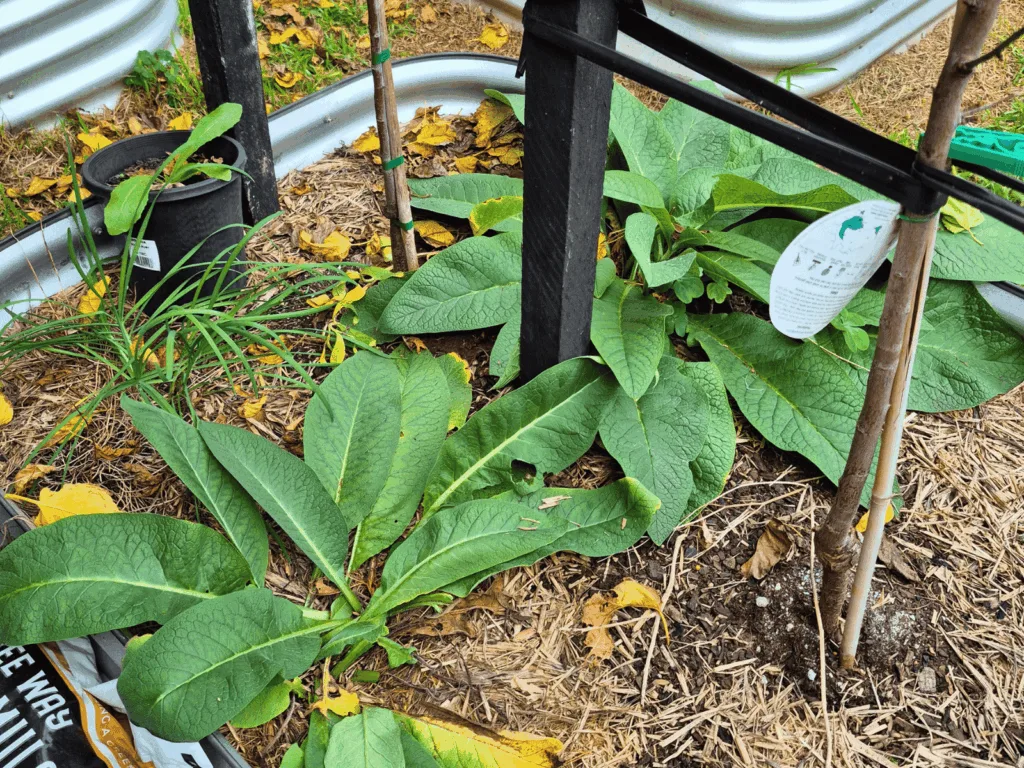
If you’re building a simple, seasonal home garden, comfrey is one of the most valuable plants you can grow. It’s fast‑growing, nutrient‑dense, and endlessly useful — both in the garden and in traditional herbal preparations.
Comfrey has deep taproots that pull minerals up from the soil, storing them in its lush leaves. That means every time you cut it back, you’re harvesting a natural, homegrown fertiliser.
If you prefer to watch instead of read, the quick video version is below.
What Comfrey Is Used For
Garden fertiliser
Comfrey leaves are loaded with potassium, nitrogen, and trace minerals that the plant pulls up from deep in the soil. When you steep the leaves in water, you create a dark, nutrient‑dense liquid fertiliser that supports strong root growth, lush foliage, and heavy fruiting. Tomatoes, capsicums, cucumbers, pumpkins, berries, and flowering plants LOVE this liquid gold. Think of it as a homegrown Powerfeed — but free, organic, and endlessly renewable.
How to Make Comfrey Fertiliser (Comfrey Tea)
This is the easiest, most beginner‑friendly way to use comfrey.
- Fill a bucket with chopped comfrey leaves.
- Cover with water.
- Weigh the leaves down.
- Let it steep for 3–4 weeks.
- Strain and dilute 1:10 before using.
How long does it last?
The concentrate keeps for months if stored in a sealed container out of sunlight.
When to use it
- Early growth → every 2 weeks
- Flowering/fruiting → weekly
- Avoid during extreme heat (plants are stressed)
Plants that LOVE comfrey tea
- Tomatoes
- Capsicums
- Cucumbers
- Zucchini
- Pumpkins
- Strawberries
- Blueberries
- Citrus
- Roses
- Any flowering annuals
Plants to avoid
- Potatoes (can encourage too much leafy growth)
- Very young seedlings (use a weaker dilution)
pin it for later 📌

Mulch
Fresh comfrey leaves break down quickly, releasing minerals directly into the soil. Use them as a “green mulch” around hungry crops like tomatoes, zucchini, fruit trees, and leafy greens.
As the leaves decompose, they:
- feed the soil
- improve moisture retention
- encourage worms
- reduce weed pressure
It’s one of the easiest ways to build fertility without buying a single thing.
Compost Booster
Comfrey is known as a “compost activator.” Its high nitrogen content helps heat the pile, speeding up the breakdown of carbon‑heavy materials like straw, cardboard, and dry leaves.
Add a handful of chopped leaves to each layer of your compost to:
- accelerate decomposition
- increase microbial activity
- boost the final nutrient profile
It’s like giving your compost a shot of espresso.
Topical herbal support
Comfrey contains allantoin, a compound traditionally used to support skin repair and soothe minor bumps, scrapes, and dryness. When infused into oil and turned into a salve, it becomes a gentle, nourishing herbal remedy for home use.
Modern herbalists typically recommend comfrey for external use only, but it remains one of the most beloved herbs for topical skin support.
It’s simple, old‑fashioned, and incredibly effective.
How to Grow Comfrey
Comfrey thrives in most climates and is almost impossible to kill once established.
| Climate | Examples | Notes |
| Temperate climates (absolute favourite) | – Southern Australia – New Zealand – UK – Northern US – Most of Europe | – Cool winters help it rest – Mild springs trigger explosive growth – Summer warmth fuels leaf production – Regular rainfall keeps it lush |
| Mediterranean climates (including Perth) | – Perth – Adelaide – Southern California – Mediterranean Basin | How it behaves: – Autumn → lush, fast growth – Winter → steady growth – Spring → peak production – Summer → slows down, may wilt or go semi‑dormant What it needs: – Afternoon shade in summer – Mulch – Deep watering during heatwaves |
| Cool–cold climates (surprisingly hardy) | – Canada – Northern US – Tasmania – Alpine regions | – Dies back completely in winter – Bursts back in spring – Produces heavily through summer It’s one of the first herbs to return after winter. |
| Subtropical climates (grows well with moisture) | – Queensland (non‑tropical areas) – Southern Brazil – Southeast US | Needs: – Consistent moisture – Partial shade – Rich soil It grows fast but can struggle in long dry spells. |
| Tropical climates (possible, but not ideal) | – Indonesia – Malaysia – Singapore – Thailand – Philippines – Vietnam (southern regions) | Challenges: Heat stress Fungal issues Poor performance in wet seasons Workarounds: Grow in partial shade Improve drainage Keep soil consistently moist but not waterlogged |
Climates Comfrey Does Not Like:
- Arid desert climates without irrigation
- High‑heat zones with no shade
- Waterlogged soils (it hates wet feet)
Planting
Comfrey is usually planted from root cuttings (small pieces of root) or crowns (a chunk of root with a growing point). Both establish quickly, but crowns grow faster in the first year.
If you want a plant that won’t spread aggressively, choose Bocking 14, a sterile cultivar bred for gardeners.
It won’t self‑seed, it produces huge leaves, and it’s the variety most used for fertiliser and herbal prep.
If you plant common comfrey, expect it to pop up everywhere — it’s almost impossible to remove once established – best to be contained to a raised garden bed or large pots
Light
Comfrey is adaptable, but its ideal light depends on your climate:
- Temperate climates: full sun = maximum leaf production
- Mediterranean climates (like Perth): morning sun + afternoon shade is ideal
- Tropical climates: Part shade prevents heat stress
Too much shade = slower growth.
Too much harsh sun = wilting in summer, but it recovers.
Water
Comfrey loves consistent moisture, especially while establishing. Once the roots are deep, it becomes incredibly drought‑tolerant — it may wilt in heat but bounces back quickly.
Watering guide:
- New plants: keep evenly moist for 6–8 weeks
- Established plants: deep water once a week in hot weather
- Cool seasons: rainfall is usually enough
It hates waterlogged soil, so avoid boggy spots.
Spacing
A mature comfrey plant can reach 60–90 cm wide and up to 1 metre tall. If it’s happy, it becomes a lush, leafy fountain.
Spacing recommendations:
- Single plant: at least 60 cm from other crops
- Comfrey patch: 1 metre between plants
- Near fruit trees: plant on the drip line as a living fertiliser source
If you plant it too close to vegetables, it will overshadow them.
Maintenance
Comfrey thrives on being cut. In fact, the more you harvest, the more it grows.
Seasonal rhythm:
- Spring: explosive growth — cut every 4–5 weeks
- Summer: slower in hot climates — cut only when it looks strong
- Autumn: another big flush — great time for fertiliser making
- Winter: dies back in cold climates; keeps growing in mild ones
Each cut gives you:
- fertiliser leaves
- mulch
- compost activator
- herbal material (if using for salves/oils)
It’s one of the most productive plants you can grow.
Why I Grow Comfrey in My Seasonal Garden
Comfrey fits beautifully into a simple, seasonal lifestyle. It gives back more than it takes, grows almost year‑round, and supports both the garden and the home.
It’s one of those old skills that makes modern life feel a little more grounded.

Related Posts
- Ultimate Beginners Guide to Square Foot Gardening
- How to Plant Garlic in Perth’s Autumn (Beginner‑Friendly Guide)
- Garlic Mistakes Beginners Make (and How to Avoid Them)
- Raising Backyard Chickens: A Beginner’s Guide to Hen Keeping
Find me on socials 👇🏼
Join the community 🏡
If you love simple, seasonal living, join my weekly email for gardening tips, old skills, and from‑scratch home inspiration.
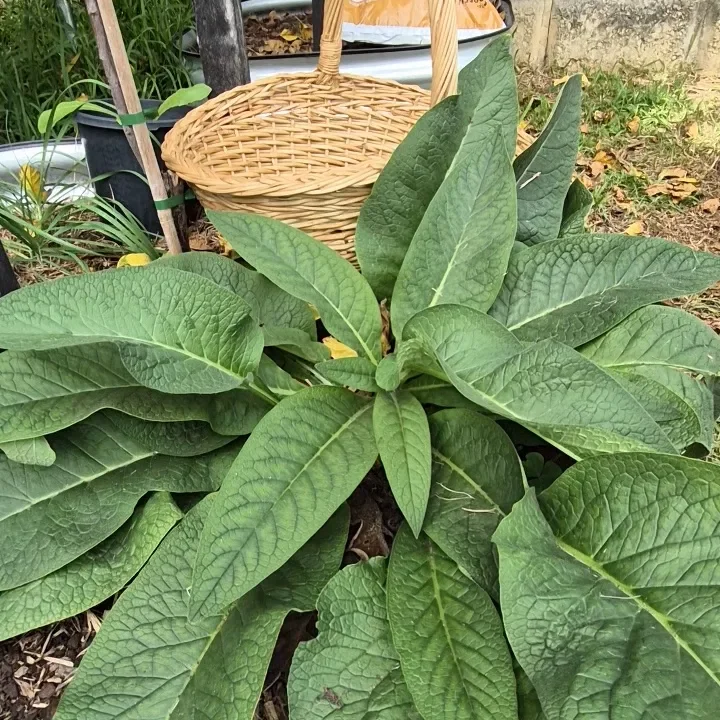
How to Make Comfrey Tea Fertiliser (Beginner‑Friendly How‑To)
This is the easiest, most beginner‑friendly way to turn comfrey leaves into a powerful, homegrown liquid fertiliser.
Materials
- Comfrey Leaves
- Bucket or Large Container
- Mesh Bag or Cheesecloth (Optional)
- Large Weight or Rock (to fit inside bucket/container)
- Bottle or Sprayer
Tools
- Scissors or garden shears
Instructions
- Harvest and Prepare the Leaves: Cut fresh comfrey leaves (including stems). Chop or tear them to increase surface area. You want to aim for enough to fill your bucket loosely.
- Pack the Bucket: Place the chopped leaves into a bucket or large container. Fill it to the top — comfrey breaks down significantly. Optional: Line the bucket with a mesh bag for easier straining later.
- Cover With Water: Pour in enough water to fully submerge the leaves. Leave a few centimetres at the top for bubbling and expansion. Use rainwater if you have it, but tap water is fine.
- Weigh the Leaves Down: Use a brick, rock, or a plate with a weight on top. Ensure all leaves stay below the waterline. Cover the bucket with a lid or cloth to reduce smell and keep insects out.
- Steep for 3–4 Weeks: Place the bucket in a shaded outdoor spot and let it sit for 3–4 weeks (longer in cold weather). Expect a strong smell — this is normal and means it’s working.
- Strain the Liquid: Remove the weight and scoop out the leaves. Strain through a sieve, mesh bag, or old cloth. The leftover leaves can go straight into the compost.
- Dilute Before Using: Dilute at 1:10 (1 part comfrey tea to 10 parts water). For young seedlings, use a weaker mix (1:15–1:20). Store any leftover concentrate in a sealed container.
- Apply to Your Plants: Water at the base of plants every 1–2 weeks. Ideal for tomatoes, capsicums, cucumbers, pumpkins, berries, fruit trees, and flowering plants. Avoid applying directly to leaves — root feeding is best.
Notes
How to know it’s ready
- The liquid turns dark brown
- Leaves break down into sludge
- It smells… potent (totally normal)
How long it lasts
The concentrate keeps for months if stored in a sealed container out of sunlight.
When to use it
- Early growth → every 2 weeks
- Flowering/fruiting → weekly
- Avoid during extreme heat (plants are stressed)
Plants that LOVE comfrey tea
- Tomatoes
- Capsicums
- Cucumbers
- Zucchini
- Pumpkins
- Strawberries
- Blueberries
- Citrus
- Roses
- Any flowering annuals
Plants to avoid
- Potatoes (can encourage too much leafy growth)
- Very young seedlings (use a weaker dilution)